

Most people come to Argentine tango for the music, the embrace, or a little curiosity. Many stay, however, because of how it makes them feel: steadier on their feet, calmer in their heads, and more connected to the people around them. Yet that isn’t just a dancer’s hunch. In fact, a growing body of research shows the health benefits of tango are real, for both mind and body. And in a city with long winters and busy lives, those tango health benefits may matter more in Chicago than almost anywhere.
Key takeaways
- Less stress and lower mood symptoms: in a randomized trial, six weeks of tango classes reduced depression and stress.
- Better balance: studies in older adults and people with Parkinson’s found tango improved balance and walking.
- A workout for the brain: improvising, following the music and reading a partner keep your mind busy in ways a treadmill can’t.
- Built-in community: a milonga is a room full of people you’ll get to know, so it’s a real antidote to big-city isolation.
- Made for Chicago: it’s indoor, year-round, and at its best on a cold January night.
Mental health benefits of tango
It lowers stress and lifts mood
In 2012, researchers in Australia ran a randomized trial with 97 people who reported symptoms of depression. They placed each person in six weeks of tango classes, six weeks of mindfulness meditation, or a waiting list. Afterward, both tango and meditation had reduced depression compared with the waiting list. However, only the tango group showed a significant drop in stress. The tango dancers also became more mindful, even though they never sat down to meditate.
That last finding makes sense to anyone who has danced. In the embrace, you can’t scroll your phone or replay a bad day at work. Instead, your attention narrows to your partner, the floor, and the next phrase of music. Tango is mindfulness you do with your feet. In other words, one of the biggest health benefits of tango is a calmer, more present mind.
Music, touch and connection all play a part
A German study took tango apart to see which pieces do the work. First, researchers measured dancers’ hormones while they danced with and without music. Then they compared dancing with and without a partner. Overall, levels of cortisol, a stress hormone, fell most with music. Meanwhile, testosterone, which is linked to motivation and social connection, rose most with a partner. Dancers also reported more positive feelings and fewer negative ones. As a result, the health benefits of tango seem to come from all of these at once: music, movement and human connection.
In the embrace, you can’t scroll your phone or replay a bad day at work. Tango is mindfulness you do with your feet.
Physical health benefits of tango
Better balance and steadier walking
Tango is, at its heart, a walking dance. Dancers spend a great deal of time on one leg, shifting weight slowly, pivoting and walking backward. Those are also exactly the skills that tend to fade with age.
For example, researchers at McGill University compared a 10-week tango program with a walking program. The volunteers were adults aged 62 to 91 who were at risk of falling. Afterward, both groups got stronger and walked faster. The tango group, however, showed larger clinical gains. Also, only the tango dancers felt more confident about their balance.
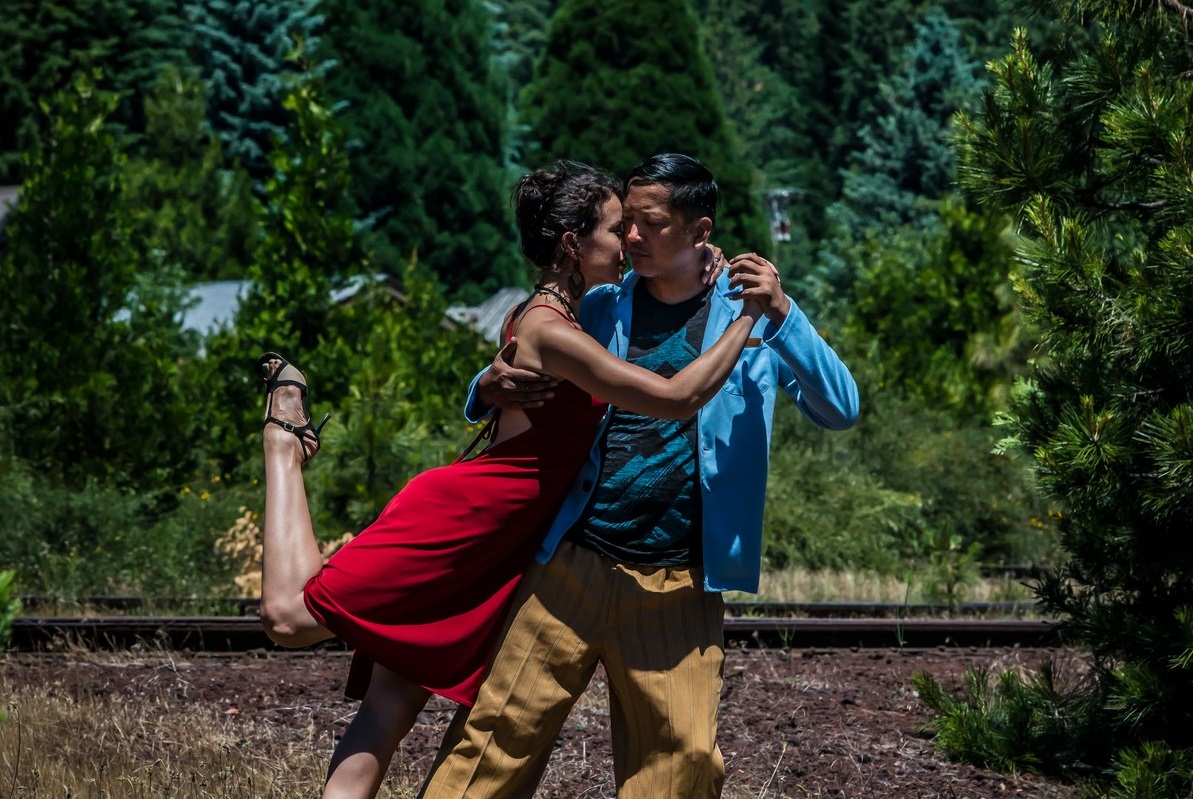
Promising health benefits of tango for Parkinson’s disease
Some of the most striking research comes from Washington University in St. Louis. In a series of studies, people with Parkinson’s disease took 20 hours of tango lessons. Afterward, they improved their balance and mobility more than people in a standard strength and flexibility class. Similarly, a later study found tango improved balance, walking distance and backward stride. The researchers suspect tango’s clear rhythm helps, along with its stop-and-go, forward-and-backward steps. After all, these target the very movements Parkinson’s makes difficult. Today, many communities offer “Tango for Parkinson’s” programs based on this work.
Real exercise that doesn’t feel like it
Federal guidelines recommend 150 to 300 minutes of moderate activity a week for adults, and they list dancing as an example. They also advise older adults to add balance training. An evening of tango covers both. You’ll walk a surprising distance in the course of a milonga. At the same time, you’ll engage your core and legs and work on posture without ever counting reps. That’s why the physical health benefits of tango add up so easily: most people simply lose track of time.
A workout for the brain
Argentine tango is improvised, so there’s no fixed routine to memorize. Leaders make choices in real time, and followers interpret them as they come. Both listen to the music, navigate a crowded floor, and adjust to a partner, all at once.
That kind of multitasking appears to matter. In the McGill program, both the walkers and the tango dancers improved on memory tests. Yet only the dancers improved at a multitasking test. In addition, a well-known study in the New England Journal of Medicine followed older adults for about five years. Surprisingly, it found that dancing was the only physical activity linked to a lower risk of dementia. That study shows an association, not proof that dancing prevents dementia. Still, the researchers pointed to what makes dance different: it combines physical effort, mental effort and social interaction. In short, your brain may share in the health benefits of tango too.
Why the health benefits of tango matter in Chicago
Our winters are long and our days are short
Chicagoans know the feeling. By mid-November it’s dark before dinner, and the cold keeps us indoors until April. Because of this, seasonal mood changes are common. For instance, UCLA Health estimates up to 20 million Americans experience some degree of seasonal depression each year. Moreover, people in northern states face a higher risk than those in the South. Regular exercise is one of the most common ways doctors suggest to cope.
Tango is one of the few forms of exercise that actually gets better in winter. It happens indoors and at night, and it pulls you out of the house into a warm room full of music and people. So when snow buries the lakefront path, the dance floor is still open. That makes the health benefits of tango especially valuable here.
A cure for big-city loneliness
Chicago is a city of nearly three million people. Even so, it’s still easy to feel alone in it. In 2023, the U.S. Surgeon General warned that loneliness carries health risks comparable to smoking up to 15 cigarettes a day. Specifically, it raises the risk of heart disease, stroke, depression and dementia. Furthermore, about half of American adults report feeling lonely.
Tango, on the other hand, is built around community. A milonga, the social dance where tango really lives, is a regular gathering of familiar faces. You dance with many partners in a night, sit and talk between sets, and see the same people week after week. We welcome newcomers, and friendships form across age, background and neighborhood. Indeed, for a lot of our dancers, the community is the best part.

Health benefits of tango that last all year
Tango in Chicago doesn’t stop when the weather turns. Instead, weekly classes and practices carry you through the winter. Then, every summer, the Windy City Tango Festival brings dancers and teachers from around the world to Chicago for several days of workshops and milongas. Having something to work toward is good for motivation, and good for the soul.
How to get started with tango
- You don’t need a partner. Most people start on their own. Besides, classes rotate partners so everyone dances.
- You don’t need experience. Beginner classes start with the walk, the embrace and listening to the music.
- Wear comfortable shoes with a smooth sole that lets you pivot. Also, leave the sneakers with grippy soles at home.
- Give it a few weeks. The health benefits of tango in the studies above came from regular classes over six to ten weeks. Therefore, consistency matters more than talent.
- Come to a milonga. Even if you only watch at first, it’s the best way to feel what tango is about.
Ready to feel the health benefits of tango for yourself?
312 Tango teaches, performs and hosts tango events across the Chicago area. Reach out, and we’ll help you find the right class. No partner or experience needed.
This article is for general information and isn’t medical advice. If you have a health condition or haven’t exercised in a while, check with your doctor before starting a new activity.
Sources and further reading
- Pinniger R, et al. Argentine tango dance compared to mindfulness meditation and a waiting-list control: a randomised trial for treating depression. Complementary Therapies in Medicine, 2012.
- Quiroga Murcia C, Bongard S, Kreutz G. Emotional and neurohumoral responses to dancing tango argentino: the effects of music and partner. Music and Medicine, 2009.
- McKinley P, et al. Effect of a community-based Argentine tango dance program on functional balance and confidence in older adults. Journal of Aging and Physical Activity, 2008.
- Hackney ME, Earhart GM. Effects of dance on movement control in Parkinson’s disease: a comparison of Argentine tango and American ballroom. Journal of Rehabilitation Medicine, 2009.
- Washington University School of Medicine. Tango improves balance, mobility in patients with Parkinson’s disease.
- Verghese J, et al. Leisure activities and the risk of dementia in the elderly. New England Journal of Medicine, 2003.
- Harvard T.H. Chan School of Public Health. New Physical Activity Guidelines for Americans.
- UCLA Health. Winter brings seasonal affective disorder with it.
- Smithsonian Magazine. An epidemic of loneliness threatens the health of Americans, Surgeon General says.